Study Techniques for Exams: Ranked by What Actually Works
Not all study methods are equal. Research ranks them clearly: practice testing and spaced practice are high utility, rereading and highlighting are low. Here is what to use, when, and why.


Most students spend their study time using methods that feel productive but do not work. Rereading notes feels thorough. Highlighting feels like engagement. Summarizing feels like synthesis. Research is consistent on all three: they produce weak results compared to the alternatives.
In 2013, psychologist John Dunlosky and colleagues published a meta-analysis in Psychological Science in the Public Interest that evaluated ten of the most commonly used study techniques. They rated each on utility based on the weight of experimental evidence. The results were uncomfortable for most students: the techniques rated highest are not the ones most students use, and the ones most students rely on rated lowest.
This guide is organized around that research. You will know which techniques are worth your time, which ones to stop doing, how to pick the right method for your exam type, and how to structure your preparation across the days before an exam.
If you want to track your preparation hours and see how much focused study time you are actually putting in, Make10000Hours logs every session. Most students discover their actual deep work hours are significantly lower than they assumed. But first, here is what the research says.
Which Study Techniques Actually Work? The Evidence Ranking
Dunlosky's team rated study techniques across three utility levels. Here is how they rank:
| Technique | Utility Rating | Why |
|---|---|---|
| Practice testing (self-quizzing, flashcards) | High | Retrieval from memory strengthens long-term retention far beyond re-exposure |
| Distributed practice (spaced sessions) | High | Spacing study over days beats massed cramming for retention and transfer |
| Elaborative interrogation (asking why) | Moderate | Generating explanations for facts deepens encoding |
| Self-explanation (explaining your reasoning) | Moderate | Articulating your thinking catches gaps and strengthens understanding |
| Interleaved practice (mixing topics) | Moderate | Forces discrimination between concepts; improves problem-solving accuracy |
| Summarization | Low | Too passive; does not require retrieving or applying knowledge |
| Highlighting and underlining | Low | Encourages passive reading, not active engagement with meaning |
| Re-reading | Low | Creates familiarity, not recall; the feeling of knowing is not the same as knowing |
| Keyword mnemonic | Low | Effective for isolated vocabulary, not concepts or relationships |
| Imagery for text | Low | Limited to concrete material; difficult to apply broadly |
The practical takeaway: build your exam preparation around practice testing and distributed practice. Use elaborative interrogation and self-explanation to deepen understanding. Cut rereading and highlighting from your core routine entirely.
The Best Study Methods for Exams in Depth
Practice Testing: The Highest-Utility Method
Practice testing means actively retrieving information from memory rather than reviewing it passively. Every time you force your brain to recall something, you strengthen the memory trace more than any amount of re-reading can.
The key is desirable difficulty: the retrieval has to feel effortful. Checking whether you recognize an answer is not the same as generating it. Multiple-choice practice builds recognition. Short-answer and free-recall practice builds retrieval strength.
In practice, this means: close your notes and write down everything you know about a topic from memory. Use flashcards without looking at the answer until you have attempted it. Answer past exam questions under timed conditions. The active recall guide covers the full range of retrieval practice methods.
Distributed Practice: Space Your Sessions
The spacing effect is one of the most replicated findings in cognitive psychology: studying the same material across multiple sessions spaced over days produces far better long-term retention than studying it for the same total time in a single session.
The mechanism is forgetting. When you review material you have partially forgotten, your brain reconstructs the memory, which makes it more durable than reviewing material you just read five minutes ago. Cramming works for tomorrow's exam. It does not work for next month's final or for retaining knowledge after the exam.
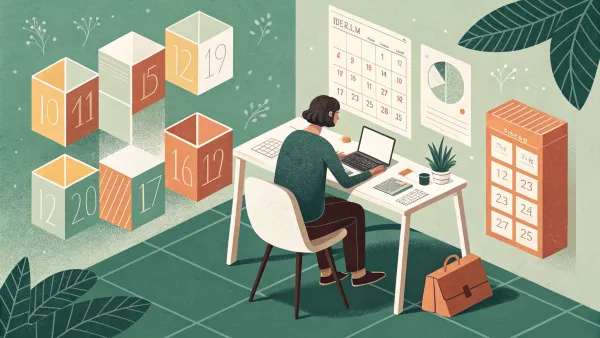
A practical spacing schedule for a 7-day exam countdown: first pass on day 1, review on day 3, review on day 5, final pass on day 7. Each review session uses active recall, not rereading. The spaced repetition guide explains how to build this into a systematic schedule.
The Feynman Technique: Build Deep Understanding First
Practice testing works best on material you understand. When you are dealing with concepts you genuinely do not grasp yet, brute-force retrieval practice will not help. You need to build the mental model first.
The Feynman Technique closes this gap: choose a concept, explain it from memory in plain language, find where your explanation breaks down, go back and fix those gaps. It is the fastest route from "vaguely recognizing something" to "actually understanding it." Once you understand it, you can add it to your retrieval practice routine.
The Blurting Method: Fast Retrieval Diagnostic
The blurting method is retrieval practice stripped to its fastest form. Read a section, close your notes, write everything you remember on a blank page, then check. What you missed is your study priority. This works especially well for topic reviews when you have limited time: 15 minutes per topic, two passes per session, and you have a precise map of where your gaps are.
Cornell Notes: Build Retrieval Into Your Note-Taking
The Cornell notes method builds practice testing directly into your notes through the cue column. After every lecture, your cue column becomes a set of self-test prompts. Cover the right side, work through the cues, check. This means every review session is automatically a retrieval session rather than a passive reread. Students who set up Cornell notes well spend their review time using the highest-utility technique without needing a separate flashcard system.
How to Choose the Right Study Technique for Your Exam Type
The best technique depends on what kind of exam you are preparing for. Here is a practical decision framework:
| Exam Type | Primary Method | Secondary Method | Avoid |
|---|---|---|---|
| Multiple choice | Practice testing with past papers | Spaced repetition flashcards for high-density facts | Rereading, recognition-only review |
| Essay / long-answer | Feynman Technique for concepts, argument mapping | Blurting for key evidence and argument structures | Passive reading, copy-paste summaries |
| Problem-solving (math, physics, coding) | Interleaved practice on mixed problem sets | Self-explanation of steps (why does this work?) | Reading worked solutions without attempting first |
| Open-book / take-home | Elaborative interrogation, concept connections | Cornell notes for structured source material | Assuming you can look everything up (deep understanding still required) |
| Oral / viva | Feynman Technique out loud, recorded explanations | Anticipated Q&A with a study partner | Written-only prep without speaking practice |
What Not to Do When Studying for Exams
Knowing which techniques to stop using is as valuable as knowing which to start.
Rereading. The most common study method among students is also one of the least effective for exam performance. Rereading builds familiarity, not recall. Familiarity feels like knowledge until the exam, when your brain is asked to produce information rather than recognize it. Replace rereading with one retrieval attempt followed by one targeted review of what you could not recall.
Passive highlighting. Highlighting while reading keeps your hands busy without engaging your thinking. It creates an illusion of marking importance without any retrieval or processing happening. If you highlight, do so after reading and only after attempting to recall what mattered. Even then, it is a low-yield activity.
Cramming in one session. A 10-hour session the night before distributes everything into short-term memory, which decays rapidly. The same 10 hours spread across five sessions produces significantly higher retention at the time of the exam and beyond it. Start earlier and study less per session.
Studying in the wrong environment. A phone on the desk reduces cognitive capacity even when it is off (Adrian Ward, University of Texas, 2017). Background TV or music with lyrics competes with language-processing tasks. Switching study locations mid-session fragments context-dependent memory formation. Choose your environment before you sit down. The how to focus while studying guide covers the full environmental setup.
Only studying alone for everything. Explaining concepts to another person forces the self-explanation and elaborative interrogation that are moderate-utility techniques. A study group used correctly, where each person teaches the group a concept rather than everyone silently rereading, is more effective than solo passive review.

How to Structure Your Study Time Before an Exam
The timing of your study is as important as the methods. Here is a practical countdown structure:
7 days out: Take stock. List every topic that could appear on the exam. Run a blurting session on each to identify which areas are strong and which are gaps. Do not study yet from strength. Focus your preparation on the weak areas first. Use this inventory to build your study schedule for the week.
5 to 3 days out: First-pass active review. Work through each weak topic using retrieval practice and the Feynman Technique for anything you cannot explain clearly. Space your sessions across subjects rather than blocking entire days on one topic.
2 days out: Mixed practice. Use interleaved practice: rotate through topics in your retrieval sessions rather than reviewing one subject at a time. This is the condition in which real exams happen. Get comfortable moving between ideas without the cue of a subject heading.
Day before: Light retrieval, not cramming. Work through your weakest topics one final time using cue-column reviews or flashcards. Do not introduce new material at this stage. Sleep is more valuable than late-night cramming. Sleep consolidates the memories you have built across the week. A full night of sleep before an exam is a study technique.
Morning of: Short review only. 20 to 30 minutes of light retrieval on your highest-priority topics. Do not attempt to cover everything. Eat, move, arrive early.
Use time blocking to schedule these sessions into your calendar before the week starts. Block the most important study sessions first, during your peak cognitive hours. Use the Pomodoro Technique to structure individual sessions into focused blocks with built-in breaks.
Track your preparation hours honestly. Most students overestimate how much quality study time they put in. Make10000Hours gives you the real number and makes the gap between estimated and actual impossible to ignore.
Frequently Asked Questions About Study Techniques for Exams
What is the most effective study technique for exams?
Practice testing (self-quizzing, retrieval practice) and distributed practice (spaced sessions over multiple days) are both rated high utility in Dunlosky's 2013 meta-analysis of ten study techniques. Used together, they produce the strongest results. Practice testing builds retrieval strength. Distributed practice ensures the memories are consolidated and durable rather than short-lived. Every other technique works better when layered onto this foundation.
How long before an exam should I start studying?
For a major exam, start at least seven days before. This gives you time for two to three spaced review cycles on each major topic, which is the minimum for solid retention. Starting three days before restricts you to cramming, which works for immediate recall but fails for exams that require applying knowledge, synthesizing arguments, or performing under time pressure on unfamiliar question formats.
Does re-reading help for exams?
No, not meaningfully. Rereading builds familiarity with material, not the ability to retrieve it under exam conditions. The feeling of knowing that rereading produces is not the same as actually knowing. Karpicke and Roediger (2008) found that students who used retrieval practice significantly outperformed students who restudied the same material, even when the retrieval group studied less total time. Replace rereading with one retrieval attempt followed by a targeted review of what you missed.
Is it better to study one subject at a time or mix topics?
Mixing topics, known as interleaved practice, produces better exam performance than blocked practice (studying one subject at a time), even though it feels harder and less efficient in the moment. The difficulty is the point: discrimination between similar concepts is a skill that exams test. Blocked studying lets you see the correct method for each problem because context tells you what to apply. Interleaved practice forces you to identify which method applies, which is exactly what exams require.
How do I study effectively when I have limited time?
Prioritize ruthlessly. Run a blurting session on every major topic to identify your actual knowledge gaps rather than assumed ones. Then spend your available time on retrieval practice for the gaps only. Do not touch material you already know well. A 2-hour session of targeted retrieval on your three weakest topics beats a 5-hour session of rereading everything equally. Speed also comes from using high-utility methods: 30 minutes of active recall on a topic covers more ground than 90 minutes of rereading it.
What is the best way to study for multiple choice exams?
Multiple choice tests recognition, which is weaker than recall but still requires more than familiarity. The most effective preparation is completing practice tests under timed conditions, then reviewing every incorrect answer to understand why the right answer is right and why the wrong ones are wrong. Spaced repetition flashcards work well for high-density factual material. Avoid studying definitions in isolation: MCQ questions often test application or contrast, not just recall of a definition.
How do I avoid blanking on exam day?
Blanking typically happens when material was studied to the point of recognition rather than retrieval. The fix is pre-exam retrieval practice under conditions that mimic the exam: timed, closed-notes, written or spoken answers. The more similar your practice conditions are to the actual exam, the more reliably your memory performs when it counts. On exam day itself, if you blank on a question, move on and return to it. Anxiety activates the prefrontal cortex in a way that blocks retrieval. Coming back to the question after lowering stress slightly often unlocks the answer.
Should I study with music or in silence?
For language-heavy tasks (reading, writing, essay prep), silence or low-level ambient sound produces better focus than music with lyrics. Lyrics compete directly with the language processing your task requires. For technical tasks like math problem sets, music with no lyrics at moderate volume can mask distracting background noise without interfering with performance. The more cognitively demanding the task, the more your brain needs uncompeted processing bandwidth. See the flow state studying guide for more on environmental conditions for peak performance.
If you want one place to track your preparation, Make10000Hours is designed exactly for this: log your study sessions, watch your focused hours accumulate, and build the consistent habit that makes exam preparation feel manageable rather than overwhelming.